If your culture work feels detached, it's aimed at the wrong thing
Most culture work isn't too big — it's aimed at the wrong place, lacks focus and sound business logic. Operating model is very often the right and necessary starting point: fix the few things that have to work well, and those become the cornerstones of your culture. Get that right, and the rest — leadership, behaviours, the interactive human elements — gets its focus and falls into place far more easily.
CEOs and CHROs want the same thing. We give them one concrete place to start — and close the gap between them.







One Engagement. The Right Tools for What It Surfaces.
Our goal is not to sell a full menu of services — and certainly not standalone training or off-the-shelf programs. We prefer to run one high-impact engagement — Strategic Culture Shift — and deploy only the services the diagnosis calls for. The mix and depth depend on the challenge and the team’s existing capabilities and dynamics. The starting point is always the same: one strategic challenge, ruthless focus, measurable outcomes, maximum impact.
Strategic Culture Shift
The core engagement. We start with one concrete strategic challenge, identify the 1–2 behavioral shifts that create the biggest cascade effect, and tie every intervention to measurable business outcomes. Values, leadership principles, engagement surveys — without the focal point and context, everything is deemed important, but nothing creates true impact. The strategic challenge is typically tied to lead metrics that connect directly to top-line growth, operating margin, or both.
How We Approach Culture →Operating Model Development
Usually where the shift has to land — and the foundation everything else stands on. Prioritization, decision-making, metrics, feedback loops: get these right and the rest of the culture work becomes far easier. Work in operational chaos and no amount of psychological safety will save your company. We find the gaps and close them with the team. This is also where applying AI often creates the most value today — and where AI raises the bar for operating-model redesign.
Operating Model Development →Leadership & Team Development
The core of a culture shift usually lives in the operating model and ways of working — but it lands through the teams, by leading them. We develop leaders and their teams in the context of the strategic challenge they're actually solving. Coaching enters as a precision instrument when an individual needs focused support. The development happens through the work, not separate programs.
How We Develop Leaders →Executive & Board Search
When the leadership team or board lacks critical competence that development can't fill, executive search is the right answer. We find leaders who fit both the role and the strategic direction — locally, or in a market you're entering for the first time, through the Cornerstone network across 40+ countries.
Learn More →Leadership Assessments
Before you make a leadership decision — promotion, restructuring, board evaluation — you want to be sure the choice answers the strategic need, not mutual chemistry or shared interests. That's where hard data and a neutral outside view help. We combine the Workplace Big Five framework with in-depth interviews to give an honest, actionable picture of your leaders against what the strategic shift actually demands.
Learn More →Why Culture Work often Fails — and What We Do Instead
Culture matters. No serious leader disputes this anymore. But the agenda has become enormous — emotional intelligence, psychological safety, purpose, values workshops, engagement surveys, feedback culture — stacked together, they create a vision so ambitious it becomes a fantasy. And when you skip the vital foundational elements — strategic priorities, operating model, decision-making, communication — the human psychological elements alone become band-aids.
Meanwhile, the CEO sees the growing culture agenda and feels frustrated. Not because culture doesn't matter — but because none of it seems to connect to the strategic challenges that keep them up at night. The CHRO sees the need for change but can't demonstrate concrete business impact, because the scope is too wide. Frustration grows on both sides.
The problem isn't the human, people side of culture work. It's that culture programs have become so detached from running a business that they often create confusion instead of results.
What does focused culture work actually look like? Very often it looks operational. A shared agenda that everyone sticks to. Clarity on roles and what ownership actually means. A culture of metrics where decisions are based on evidence, not opinions. Tight feedback loops where teams learn fast and adjust faster. These are the shifts that CEOs recognize as real — because they directly affect how the organization executes.
Top to bottom, each layer sets up the next. Bottom to top, each layer builds on the one beneath it. Nothing floats free — which is exactly why Strategic Culture Shift works where generic culture programs fail.
Learn MoreOur Background Is in Running Businesses.
We're not career consultants. Our team has led organizations as CEOs, SVPs, and board members — managing P&Ls, building teams through transformation, and navigating the kind of strategic challenges you're facing right now.
Our background shapes everything we do. When we work on culture, we think in terms of execution speed, decision quality, business outcomes, team engagement and atmosphere — frameworks and models are there to support the work. We challenge where needed and roll up our sleeves where it matters.
We also build our own AI tools. Our proprietary culture diagnostics platform helps us analyze your organization's cultural dynamics before we walk in the door — so we arrive with insight, not assumptions. We use technology to make our work sharper and faster — not to replace the human judgment that culture work demands. Getting started is fast and efficient.
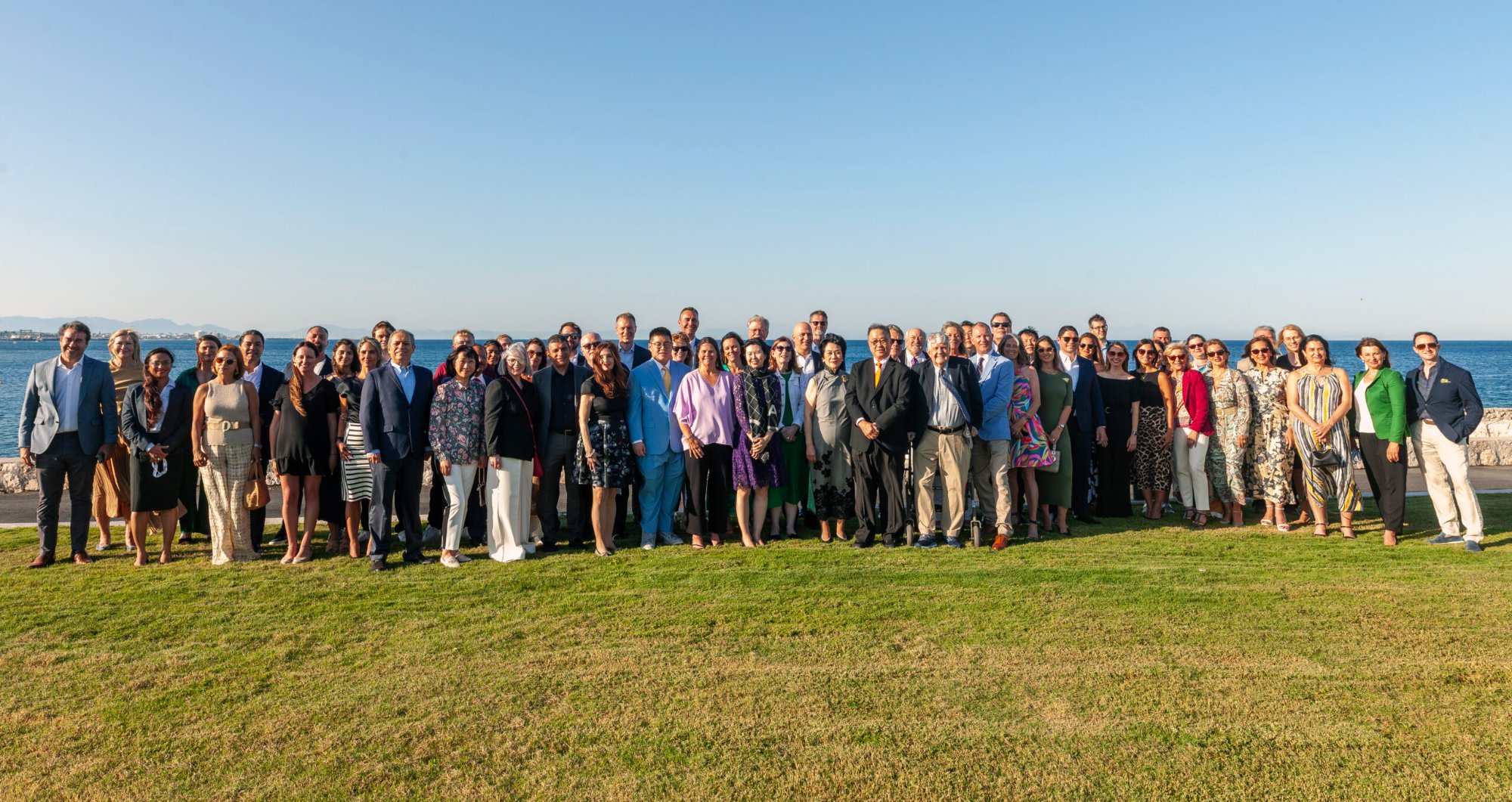
Part of Cornerstone International Group
As part of Cornerstone International Group, Bright Day Partners combines global reach with local depth. When your strategic challenge crosses borders — whether that's an executive search, a market entry, or a cross-border strategic culture shift — we connect you to 250+ senior consultants across 40+ countries.
For Finnish companies taking their next serious step into a new market, the network creates immediate, practical value. Finding the right Country Manager in Germany, a commercial lead in the United States, or a board member with genuine local knowledge in Southeast Asia — these are searches that require insight no Finnish firm has on its own, and no local firm has the strategic context to run well. Through Cornerstone, both are available through one conversation in Helsinki.
Strategic Culture Shift
Culture programs fail when they try to change everything — or when they're aimed at the wrong things, before the foundation is in place. We take the opposite approach: one strategic challenge, the operating-model foundation under it, and the 1–2 behavioral shifts that actually move the business.
The Culture Agenda Has Become Too Big — and Aimed at the Wrong Things
Culture matters. Deeply. It shapes how your organization thinks, decides, and delivers. When culture and strategy are aligned, teams perform at their best — and people thrive. No serious leader disputes this anymore.
But something has gone wrong with how we approach culture development.
The agenda has become enormous. Emotional intelligence. Psychological safety. Vulnerability. Empathy. Purpose. Values workshops. Engagement surveys. Feedback culture. Diversity frameworks. Leadership identity programs. Each of these has merit — but stacked together, they create a vision so ambitious that it becomes a fantasy. Disconnected from the daily reality of running a business.
The CEO sees the growing culture agenda and feels frustrated — not because culture doesn't matter, but because it's getting harder to see how any of it connects to the strategic challenges that keep the CEO up at night.
The CHRO sees the need for change clearly and has the vision to make it happen — but struggles to demonstrate concrete business impact, because the scope is too wide and the execution plan isn't tied to the priorities that drive the P&L.
And increasingly, there's a third pressure. AI is reshaping how every function in the organization works — compressing timelines, changing role boundaries, creating new demands on leaders who were already stretched thin. Wanting to turn the company into an "AI-native" only adds to an already overloaded culture agenda — and to the fantasy.
The result? Both leaders want the same thing — a high-performing culture that delivers results. But the CEO isn't confident in the culture agenda, and the CHRO doesn't feel the CEO is truly committed. Frustration grows on both sides.
And this friction doesn't stop at the leadership level. An overambitious culture agenda — the very initiative meant to create a great place to work — can do exactly the opposite. It creates confusion. It sets unrealistic expectations that breed anxiety rather than energy. And it pulls the organization's focus away from what the team should be delivering together.
The problem isn't the human, people side of culture work. It's that the scope of culture work threatens to nullify its positive intentions.
The Fix Is Sharper Focus
The organizations that make real progress on culture don't do more. They do less — but with sharper focus and direct connection to what the business needs right now. This sounds really simple, but even great companies struggle with prioritization. And no less is this true when it comes to culture development, in all likelihood even more.
Sharper focus means starting with one concrete strategic challenge. Not a vague aspiration, but the business problem that demands a shift in how your teams work. Then identifying the one or two behavioral changes — the centers of gravity — that will create the biggest ripple effect across the organization. And tying every intervention to executing the strategic business initiative and to measurable business outcomes.
This isn't about choosing business over people, or strategy over culture. It's about using one to drive the other. When culture work has a clear strategic anchor, it earns the urgency, the budget, and the leadership commitment it needs to succeed.
We use AI-powered diagnostics to help identify the right starting point — analyzing organizational patterns and cultural signals before the engagement begins. But the tool serves the methodology, not the other way around. Technology helps us see more clearly. The real work is still about people, priorities, and the discipline to stay focused.
Culture is what we do every day
When we say "culture shift," we don't mean organizing retreats and creating values posters, although when everything is said and done, those can be useful, too. We mean creating a positive and measurable business impact: a shared agenda people stick to, a clear understanding of responsibilities and ownership, decisions grounded in deep understanding, feedback loops that guide what gets done. The operating model is where these practices live, and the areas where you commit to operational excellence become the cornerstones of your culture. Get that foundation right, and the rest of the team- and culture-building work gets a whole lot easier: a surprising amount of the friction that drags teams into endless "feelings" work simply defuses once people have a working platform where they can do good work together.
These are the shifts that separate companies that execute from companies that talk about executing. They're also the areas where CEOs and CHROs most naturally find common ground — because they sit at the intersection of strategy and people.
What about empathy, psychological safety, vulnerability, talk about feelings — the tools that dominate most culture conversations? They matter. But they're precision instruments, not the program itself. A skilled leader is trained to keep them in the back pocket and use them when needed — to untie a specific knot, to unlock a stuck team dynamic, to rebuild trust where it's broken. When these tools become the headline of a culture program, two things happen: the CEO mentally checks out, and the CHRO can't demonstrate business impact. When they stay in the back pocket and are deployed with skill at the right moments, they're powerful. The difference is in focus, the different roles these elements play and judgement.
Built for CEOs and CHROs — Together
The most effective culture transformations happen when business leadership and people leadership are genuinely aligned. Not when one convinces the other — when both see the same opportunity.
For the business leader, we bring the strategic focus and P&L discipline that makes culture work feel relevant and results-oriented.
For the people leader, we bring a clear, concrete way to tie culture development to strategy execution — and a practical, focused path on which we can demonstrate the results great culture work delivers.
When the whole leadership team is aligned on the needed change and where to start — one set of measurable goals, and a focused execution plan — that's when culture becomes a genuine competitive advantage.
Fast, Structured, Decisive
We don't believe culture transformation should start with a six-month diagnostic. Our approach takes you from "we need to do something" to "here's exactly what we're doing, why, and how we'll measure it" in a matter of weeks, not months. We believe in an efficient start and a structured process that engages your leadership team and key people across the organization — quickly, respectfully, and with clear decision points.
Because the longer you spend planning culture change, the less likely it is to happen.
What Makes Us Different
We connect culture and strategy — we don't choose between them. Strategy sets the direction and drives the choice of priorities. The culture shift supports strategy execution. One without the other doesn't work.
We work with CEO and CHRO together — not one or the other. The CEO always sets the direction for the entire organization's culture through their role and behavior, whether intended or not — that can't be outsourced to the CHRO. But the CHRO's expertise in facilitation and execution is essential. We create alignment with both the CEO and CHRO and other key leaders, around shared priorities.
We make the change impactful, yet small and manageable enough to actually work. The biggest risk in culture development isn't thinking too small. It's creating an oversized agenda so big that everyone is confused. This scope creep must be actively fought against.
We measure what matters. Revenue. Margin. Execution speed. Decision quality. Team trust. Collaboration. We track both sides of the story — and we start by defining what success looks like in your quarterly numbers.
AI is embedded in how we work. This is rapidly becoming a requirement rather than a differentiator. A service provider that is not continually using AI to accelerate analysis, automate workflows, and improve its own delivery is unlikely to help you achieve those same benefits in your operations. We apply that discipline first to our own work, then bring what proves useful into yours.
Let's talk.
Book a free consultation and we'll tell you honestly whether we can help.
Book a Free ConsultationOperating Model Development
How your organization actually works day to day — how you prioritize, who owns what, how decisions get made and rolled out, how success is measured, how teams coordinate their work together. The operating model is the foundation your strategy stands on, and usually where a culture shift has to land first.
The Foundation Everything Else Stands On
Culture isn't only what's written on the values poster — its core is actually the things an organization has decided to be excellent at every day, and holds itself to under pressure. The operating model is where you choose the areas where you commit to operational excellence — and those areas become the cornerstones of your culture.
When the operating-model fundamentals are in good enough shape, everything else gets easier. The leadership work, the team behaviours, and the harder human conversations don't disappear, but they finally have a shared foundation, a frame, and a focus. In our experience, a surprising amount of the friction that sends teams into endless "feelings" work simply disappears once the operating model gives people clear principles that enable quality work together. Instead of the human-leadership elements becoming band-aids, they become an essential, effective, and natural part of how the company behaves. That's why, in most of our engagements, the operating model is at the heart of the work: we find the places where the operating model is quietly working against people, and fix those gaps with the team.
It Starts With One Shared Agenda
By far the most common gap we find is the absence of a shared agenda — one with genuinely shared priorities and a clear direction. The leadership team may agree on paper about what's been decided, but individual members can interpret the implications in their own way, through their own agenda. A company may have ten priorities, none with a solid execution plan or a strong enough organization behind it, none whose ownership translates into quality delivery day to day — all of them "critical." The organization can work hard and move slowly, pulling in subtly different directions. Building one shared agenda — a short list of priorities the whole leadership team actually commits to, holds under pressure, and for which the conditions for success are built — is very often the core of operating-model work.
AI Is Changing the Foundations of the Operating Model
AI is gradually changing what an operating model can do — what's worth automating, where human judgment is applied, how fast a team can credibly move. Without a strong, high-quality operating model, workflows, and architecture, AI adoption stays superficial. That's also part of why getting the operating model into good enough shape matters now rather than later. AI may guide how the culture-shift need is identified and chosen, but it isn't necessarily the headline.
Let's talk.
Book a free consultation and we'll tell you honestly whether we can help.
Book a Free ConsultationLeadership & Team Development
The best way to develop leadership is to change how you work while working on real strategic initiatives — not by attending programs. We develop both levels where culture actually lives: how each leader leads themselves, and how the team works together — in the context of the initiatives they're actually delivering.
Leadership development works best when it's tied to a real business challenge in daily work. It falls short when it's abstract — when leaders learn frameworks in a classroom and then go back to the same environment that created the problems in the first place.
Our approach is different. We work with the leader and their team together, in the context of the strategic initiative they're trying to deliver. The development happens through the work itself — not separate from it.
And if - in one of those classrooms - you happened to have come across an exciting framework you think fits your leadership challenge - we will also help you put it into context and deploy it successfully, if it's suited to solving the challenge. We are all familiar with stories of leaders who come out of high end trainings and try to force in a new paradigm with a sledgehammer without truly understanding the context, often with negative consequences.
How We Work With Leaders and Their Teams
Most leadership development focuses on the leader in isolation. We focus on the leader and their team — because a leader can't change how they work if the team isn't part of that journey. And a team can't perform differently if the leader hasn't genuinely shifted.
The strategic impact is the greatest when we can tie this work to the Strategic Culture Shift agenda, but it works also very well in isolation, as long as the leader and the team have a clear goal and strategic context.
It starts with diagnostics. Before any development work begins, we need to understand your situation. What's the strategic challenge? Where are the real gaps — in leadership capability, in team dynamics, in how the operating model actually functions versus how it's supposed to? We use a combination of surveys, AI-assisted analysis, and direct conversations to build a sharp picture quickly. The diagnostics determine the scope, set clear goals, and ensure every hour of development work ties back to something that matters for your business.
Coaching, mentoring, and everything in between. This isn't traditional one-to-one coaching. It's a hybrid: we coach each leader individually — but also work with them in the context of their team. We mentor where experience and guidance matter more than asking the right questions. And we work on team dynamics directly — how decisions get made, how information flows, how conflicts get resolved — because that's where the real leverage is.
Delivered by senior leaders with real operational experience. Our consultants have managed P&Ls, led teams through transformation, and navigated the kind of challenges you're facing. They draw from a wide toolkit of coaching and consulting methodologies — but only use the tools that connect directly to solving your actual strategic challenge. No generic exercises. No filler.
Culture is built in the details. Not posters on the wall — the habits your team builds every day. How decisions get made, how challenges get escalated, how new ways of working are adopted. We help teams build new habits that stick.
Realistically, each project runs a minimum of 3 months, but the length is decided by the scope of the actual business challenge. Typically there is one dedicated coach/consultant per team, but for larger engagements we can scale the team to match.
Fractional Leadership
Some challenges call for more than coaching from the side — they call for an extra, seasoned operator inside the team for a while. That's fractional leadership: a senior executive embedded with your leadership team on a flexible, part-time basis, for a fraction of the cost and commitment of a full-time hire.
We embed an experienced leader — someone who has carried real P&L responsibility — alongside your team for a defined period. They bring senior expertise straight into the room: P&L discipline, customer-centric operations, agile ways of working, and operating-model and behavioral-change leadership — plus the hands-on horsepower to move things, not just advise on them.
This isn't a takeover, and it isn't project management. The business owner stays the owner; the fractional leader adds capacity and capability exactly where the strategic challenge demands it. Our best results come from this model: the challenge gets solved, the leader grows through the work, and the team builds capability that stays once we're gone.
This model fits when a leadership team is navigating a challenge that crosses functional boundaries, when the business owner needs a sparring partner with genuine operational experience, or when the organization needs to build a new capability while still delivering on today's objectives.
ICF certified coaching professionals. Leadership and Team Development is supported by ICF certified coaching professionals within our Cornerstone network, all with deep experience working with C-suite and senior executives. These aren't generalists — they're specialists in executive-level development who understand the pressures, politics, and possibilities at the top. They also understand that today's leadership challenges increasingly involve navigating technological change, building adaptive teams, and making decisions in a world where the pace of change outstrips traditional planning horizons.
Let's talk.
Book a free consultation and we'll tell you honestly whether we can help.
Book a Free ConsultationExecutive & Board Search
Sometimes the Strategic Culture Shift diagnostic surfaces a gap that development alone can't close. That's when search enters — finding the right talent locally, or the right leader for a market you're entering for the first time.
When the Culture Diagnostic Points to a Talent Gap
Leadership development closes most gaps. Better ways of working, clearer ownership, tighter feedback loops — these are almost always within leadership's reach. But occasionally the diagnostic surfaces something different: a capability that simply isn't present, that the current team can't grow into fast enough given the timeline the strategy demands, and that calls for a permanent, full-time leader.
That's when search enters the engagement — as the logical next step, when the need calls for it.
What We Look for Beyond the CV
Most search processes match candidates to a job description. We also match them to a strategic context — specifically, to the culture shift the organization is in the middle of executing.
That means evaluating candidates against the behavioral profile the strategic challenge demands, not just their track record. A technically excellent leader who doesn't support the strategic change drifts easily back into the old culture. A leader well attuned to the change, with slightly less domain experience, will often outperform them significantly — because they recognize what kind of leadership the change requires.
This could be called strategic culture fit. It's the dimension standard search processes have the least visibility on, and where the most expensive hiring mistakes happen.
How We Work — Local Search
We start from both the culture-shift context and the role specification. Once we understand what the organization is building and what behavioral profile the next phase demands, we map the market for candidates who fit both dimensions — technical qualification and strategic fit with the culture-shift need.
The Cornerstone network lets us search for suitable candidates across a wider market. The assessment process evaluates fit objectively. You get a shortlist of people we genuinely believe can accelerate the change.
Entering a New Market? This Is Where Our Network Delivers
Planning to expand into a new market — or have you already decided, but aren't yet sure how to get started? This is where Cornerstone is the right partner: when you need the right people to launch and run the new business. The make-or-break factor in a new market is rarely the plan on paper; it's the leadership on the ground that executes it — and finding that leadership is exactly what the network exists for.
To be clear: the strategy isn't part of the engagement. Which market to enter, and what offering to take there, is your company's strategic call — though we do have tools that help you make it. What we deliver is the rest: we help you find, assess, and select the right leader, with genuine local insight, to set the operation up and/or run it successfully.
A well-chosen leader bridges two worlds at once — your company's strategic DNA and a genuine understanding of the local operating culture. As part of the Cornerstone network, we specialize in delivering this difficult hire.
The Two Dimensions of Fit in an Expansion Hire
The first dimension is fit with your company's strategic culture. Does the candidate internalize where the company is going and why — not just what the job description says? A Country Manager operating independently in a new market is constantly forced to make decisions without direct support. Those decisions reflect their values, their instincts, and their understanding of your company's strategic intent.
The second is fit with the target market's operating culture. Finnish directness, flat hierarchies, and metrics-driven decision-making don't translate identically into Germany, France, the United States, China, or India. The right candidate bridges both cultures fluently. The wrong one performs well in the interview and struggles the moment they're operating alone.
The Cornerstone Network
Finding someone who fits both dimensions requires genuine local knowledge — not a database query. Through the Cornerstone International Group network, we have access to senior consultants across 60+ offices in 40+ countries who know their markets from the inside: the talent landscape, the operating culture, the candidates who aren't actively looking for something new but would consider the right opportunity.
Jyri has built close personal relationships with partners, leaders and board members across that network. Wherever you're expanding, that means a trusted colleague on the other end of a call — not a cold outreach to an office that doesn't know you.
How We Work — New Markets Search
We start with your strategic context and expansion intent. Cornerstone's local office leads the market mapping and candidate identification. We run the assessment jointly, evaluating candidates against both dimensions of fit. As part of the executive search, we produce a shortlist of leaders who are technically qualified, strategically aligned with the company's goals, and capable of operating effectively in the target market's culture.
We stay close through the first ninety days. That's when culture fit is tested in practice — and when early course correction, if needed, costs the least.
Let's talk.
Book a free consultation and we'll tell you honestly whether we can help.
Book a Free ConsultationLeadership Assessments
Make leadership decisions with confidence. Not guesswork.
Some of the most important decisions a company makes are about people. Who gets promoted. Whether the current management team is the right one to execute the strategy. Who has the potential to lead at the next level.
These decisions should involve more than a mix of a CV, gut feeling, and "good-fit" chemistry. And in a world where AI is compressing timelines, reshaping role descriptions, and redefining what leadership actually requires, the stakes are higher than ever.
The Assessment Criteria Are Shifting
Traditional leadership assessments focus on strategic thinking, decision-making style, stakeholder management, and communication. These dimensions still matter — and always will. But new dimensions are entering the picture.
As the pace of change accelerates, you need to know whether your leaders can navigate continuous evolution — not just today's challenges, but the waves of change ahead. The leaders who will thrive have developed the meta-skill of learning and adapting as the world around them shifts. Domain expertise remains essential, but what increasingly sets leaders apart is the ability to update their approach, lead through uncertainty, and build teams that can do the same.
And in the middle of all this, one thing hasn't changed: the ability to lead people is still the hardest and most important skill. Building trust. Developing individuals. Creating teams that genuinely collaborate. Managing the human dynamics of change — the resistance, the fear, the energy. No amount of strategic brilliance compensates for a leader who can't bring people along. We assess for this with particular care.
Evaluating Internal Candidates
You have a senior position to fill and you first consider options from inside the organization. A smart move — and sometimes even one written into the operating model. But how do you objectively compare people who have different roles, different visibility, and different relationships with decision-makers?
We provide a structured, unbiased assessment that looks beyond politics and familiarity. You get a clear picture of each candidate's leadership capabilities, strengths, and areas to watch — including their readiness to lead through the technological transformation ahead. The decision is based on evidence, not assumptions.
Board-Commissioned Management Assessment
The board wants to understand the management team better. Maybe you're preparing for a strategic shift. Maybe there are performance concerns. Maybe you want an honest, external view of whether your current leadership team has the adaptability and learning agility to navigate the next three to five years — years that will look nothing like the last five.
We provide the board with a thorough, honest assessment — the kind of insight that's hard to get when everyone is inside the same organization.
How We Do It
We use the Workplace Big Five framework as the foundation — one of the most scientifically validated personality and leadership assessment tools available. We combine the results with in-depth interviews and our own experience evaluating leaders in complex, fast-changing environments.
When agreed, we also run the assessment in a real team context: a facilitated leadership workshop where we work through the leadership team's identified dynamics challenges together. It's a highly effective way to see how the different members play together and what role each takes.
We're also developing a proprietary AI-powered assessment methodology that evaluates a leader's readiness to operate in a changing business environment. This is an evolving capability — because the environment itself is changing rapidly, the assessment criteria need to evolve with it.
The output isn't just numbers and graphs. It's actionable insight into how each leader thinks, decides, adapts, and performs under pressure.
What You Get
Each assessment delivers a clear, honest report: the leader's strengths and how to leverage them, areas that need development or support, how they're likely to perform in specific leadership situations, their readiness for the AI-driven transformation ahead, and concrete recommendations for the decision you're facing.
Let's talk.
Book a free consultation and we'll tell you honestly whether we can help.
Book a Free ConsultationOur Team & Partners
Our team is made up of senior leaders with real operational experience. We've been in your shoes — and it shapes everything we do.
We're not career consultants. We've led businesses, managed P&Ls, built teams, and navigated the kind of strategic challenges you're facing right now. That operational experience shapes every conversation we have and every engagement we deliver.
Every client gets our full attention. We're small enough to care deeply about your outcomes and experienced enough to challenge you when it matters.
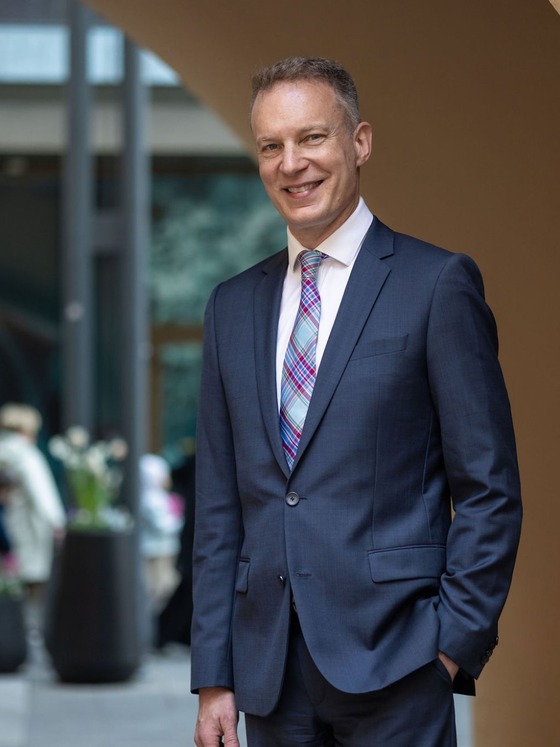
Jyri Ratia
Jyri Ratia has 20 years of senior executive experience (CEO, SVP, VP) in organizations ranging from multibillion corporations to mid-size companies, with his best work as a P&L owner building customer-centric operations and agile leadership practices. As a consultant, mentor and coach, his strongest results come from concrete business problems with measurable outcomes in multidisciplinary teams — and from the invaluable lessons that come from getting things wrong along the way. His toolkit spans P&L management, strategy & culture, customer centricity, agile practices, operating model development, leadership and team development, and master facilitation. Jyri has built close personal relationships across Cornerstone's global network — when you need the right leader in a market you don't know, that means genuine local insight, not a database query. He is part of the AI Collective team Finland.
Sector expertise: Industrial, technology, media & telecom, and service sectors.
Jyri holds a Master's degree in Business from Aalto University, with Computer Science studies at Helsinki University. He is SAFe certified and a certified Growth Mindset Coach.
We Work with Carefully Selected Experts
Bright Day Partners operates as a boutique consulting network. Senior associate practitioners join client engagements based on fit and need — bringing deep expertise from their own independent practices while working within the BDP methodology and framework.

Lena Barner-Rasmussen
M.Sc. (Econ), ICF Associate Certified Coach (ACC)
Lena Barner-Rasmussen is an executive coach, team coach and communications advisor with over 20 years of experience helping leaders and teams perform in complex environments. With a Master's degree in Economics and an early career in journalism, she combines analytical thinking with a deep curiosity about people and organizations. As a business leader, she has a proven track record of building and leading international expert teams serving global companies and delivering profitable growth. Lena is an ICF Associate Certified Coach (ACC) and has completed formal training in systemic team coaching. Her particular interests include motivation, team dynamics and creating the conditions for sustainable high performance.
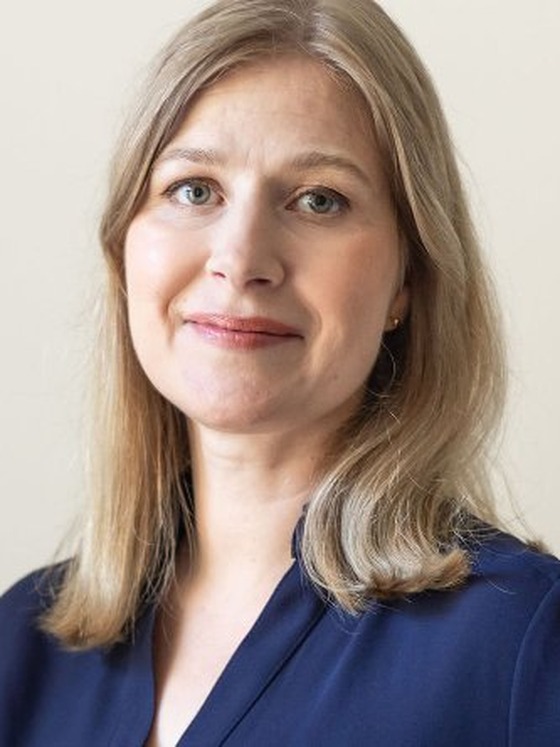
Outi Ikonen
MSc (Psychology), MSc (Economics), Work & Organizational Psychologist
Outi has over 20 years of experience in organizational development — working with leadership teams, managers, and entire work communities to improve both performance and the human side of work. She draws on her experience in new business development and senior finance expert roles. Her particular area of interest is strengthening trust within work communities.
Backed by a Global Network of Senior Consultants
Beyond our Helsinki team, we work with a carefully selected network of senior coaches, consultants, and specialists — including ICF-certified coaching professionals who support our Leadership & Team Development work. Each is chosen for their deep expertise and alignment with how we work.
Join Us
We're growing our network of entrepreneurial partners. If you've led real businesses and want to help leaders solve their strategic, cultural, and leadership challenges, let's talk.
We're Looking for New Partners
We're looking for people who've held real responsibility — not just advised from the sidelines. If you've carried P&L responsibility, built teams, and know what it takes to drive strategic change, you'll fit right in.
We value capability, experience, and a genuine interest in creating results-driven, focused operating cultures — together with international experience that helps with integrating into the Cornerstone network. An ICF certification is an advantage in leadership and team development.
We're building proprietary AI tools that strengthen our consulting engagements — from culture diagnostics to customer insight to automated assessments. Hands-on AI experience that goes beyond prompt engineering is a significant asset in serving our clients and meeting their challenges.
If the descriptions above fit, and you're interested in entrepreneurship with Bright Day Partners, get in touch with Jyri: jyri@brightdaypartners.com (leadership, culture development, and network partnerships)
Examples of Successful Engagements
Here are a few examples of what Strategic Culture Shift looks like when it's working — the real challenges it surfaces, the tools it deploys, and the outcomes it produces.
Growth Unlocked
The Situation
The local CEO of a global technical services company was under pressure. Growth in the Finnish market was lagging peer markets significantly, and the instinctive response was the one it almost always is: more sales training. But the CEO wasn't sure it was the right direction — sales training was on the table again, but too many times the results had been thin. It was necessary to dig deeper into where the problem actually lived.
Where the Real Problem Was
The company wasn't underperforming because of weak sales — it was underperforming because it was trying to do too many things simultaneously and had lost the ability to prioritize. The strategy had more than ten active priorities, none of them receiving enough focused attention to move. The growth barrier turned out to be operational: two critical lead times — poorly handled in the sales process and felt directly by customers — drove how much business was lost, every day. This was a customer experience problem dressed up as a sales problem.
What We Did
We started with an operating model and strategy assessment against the growth objective — mapping where the organization's attention and resources were actually going versus where they needed to go. Culture diagnostics surfaced the deeper pattern: the absence of a strategic (growth) focus had led to a back-office and admin dominance that had gradually displaced genuine customer centricity. The company knew its processes better than it knew its customers.
From there, leadership assessments evaluated the team against what the shift would actually demand. Two key leadership-team positions had significant performance challenges — one a capability gap, the other a values conflict and behavioral issue that was quietly undermining the team's integrity and coherence. Both positions were changed. This wasn't a comfortable finding, but it was an honest one — and acting on it was what made the rest of the work possible.
With the right team in place, the engagement moved into culture shift facilitation: building the solution and execution plan around two ruthlessly prioritized focus areas, then supporting the leadership team through a 24-month development roadmap that included new processes, staff retraining, new applications, and ERP changes. Although the problem sounded "small" at first — operational and customer-experience-related — the need and the solution were strategic in the highest degree. There was room for only one other significant development project.
Strategic Shifts in the Operating Culture
Two behavioral changes drove the outcome. The first was strategic prioritization in practice — the company went from ten-plus simultaneous priorities to two, and held that discipline even when pressure mounted to add more. The second was genuine customer centricity — rebuilding operations around the main customer segment rather than around internal process convenience. Neither shift was complicated to describe. Both were hard to execute.
Putting All Focus on the Customer
The Situation
The service business of a global manufacturing company was losing customers — not dramatically, but steadily and visibly. CX problems had been accumulating: broken promises, inability to deliver, the kind of friction that makes customers quietly start looking at alternatives. The service business itself was small relative to the company's total revenue, but it was load-bearing for the whole portfolio. If customers lost confidence there, the hundreds of millions in product sales were at risk too. Multiple initiatives had been launched to fix it. None had worked. Some had added more burden to an already strained organization.
Where the Real Problem Was
We created a small mess before we found the real problem. The initial leadership team briefing pointed us in the wrong direction, and we ran a kickoff on false premises. It backfired quickly — a lot of tension in the room, people venting frustrations, feeling hurt and disrespected. That was uncomfortable, but it was also the signal that we were working on the wrong thing.
The corrective action was straightforward: pick up the phone and start talking to people. From leadership all the way to expert level. What those conversations revealed was the real situation: no one was actually in charge. A leadership vacuum sat at the centre of everything. Roles and responsibilities existed on paper but not in practice. There was no common agenda, no "one team" coherence to speak of. The CX problems weren't a process failure or a capability gap — they were the predictable output of an organization where nobody owned the outcome.
What We Did
We set up a core team with a clear leader, the right team composition, proper governance, and working feedback loops. Then we identified quickly which metrics actually mattered for fixing the customer experience and focused the team's attention there — two of them monitored daily at the start. With the right structure and the right people in place, the turnaround work could begin in earnest.
The target was six months. The ways of working and CX improvement were delivered in three.
Strategic Shifts in the Operating Culture
Customer centricity needed to become operational, not aspirational. That meant building a working culture around clear, prioritized lead metrics — monitored regularly, acted on quickly, owned by a team that was genuinely committed to a common agenda rather than protecting individual territories.
The leadership vacuum was the harder fix. Fortunately, the leader who existed on paper stepped up and delivered. That's not always how it goes, but here it significantly accelerated reaching real results.
What Changed
The ways of working shifted in three months. The sales trajectory followed over the next three: +30% growth versus prior projections, driven by customers who recommitted — and in some cases expressed genuine surprise at the speed of the turnaround. One client put it simply: "What on earth did you do?"
The team felt it too. Stress dropped. The negativity that had been a constant background presence disappeared. That's not a soft outcome — it's what a functional team actually feels like.
Building a Common Offering for Large Enterprise Clients
The Situation
A European infrastructure services company was losing ground with its large enterprise clients — not through any single dramatic failure, but through accumulated friction. Services that had once been competitive were becoming outdated. Customers weren't seeing improvements. Issues and problems were a recurring experience rather than an exception. The relationship was eroding, slowly but visibly.
The company knew something needed to change. What it didn't yet know was how to change it — or where exactly to start.
Where the Real Problem Was
The diagnostic surfaced a cluster of connected problems rather than a single root cause. Customer issues were being resolved slowly because the underlying operations were outdated. The innovation pipeline had no real governance — ideas existed but nothing moved. There was no experience in digital service creation, no agile practice, and no modern tooling. Everything ran on waterfall project methodology, which meant the feedback loops that would have surfaced customer pain early weren't there.
The result was an organization that was genuinely trying to serve its customers well but had no mechanism for learning fast, iterating quickly, or organizing around what customers actually needed. The capability gap was real, but the deeper issue was structural: the way work was organized made improvement almost impossible.
What We Did
Rather than designing a transformation program, we chose three strategic development initiatives as pilots — areas where the customer pain points were clear, where the company had been slow to deliver solutions, and where progress could become visible quickly. Multi-skilled teams worked on each initiative using design thinking practices, with facilitation support throughout. The goal was to solve real customer problems while simultaneously building new ways of working — so the learning happened through the work, not separate from it.
The initiatives served a dual purpose. The aim was for at least one of them to deliver clearly measurable business results. All of them were meant to serve as organizational diagnostics: analyzing team capabilities, organizational dynamics, and the structural changes the company would need to continue independently.
Strategic Shifts in the Operating Culture
Three behavioral changes drove the outcome. Customer centricity became operational within the pilots — the teams developed a clear, shared understanding of where the customer's pain points actually were, where to focus, and how to measure what good looks like from the customer's perspective. The goal was to move customer centricity from a values statement to disciplined execution.
Lead metrics came to the fore as a management tool, rather than rear-view (lag) metrics. Instead of waiting for NPS or CSAT data to confirm what had already happened, the teams monitored the specific operational indicators that predicted customer experience — and acted on them in real time with tight feedback loops.
On top of that, the teams learned to work together across functional boundaries toward shared priorities, and the silos broke. Not through a reorganization, but through a strong common agenda and shared goals that made working together natural and rewarding. Expert-level facilitation support made the team's collaboration possible, despite their different backgrounds.
What Changed
The primary initiative delivered within the pilot timeline. Lead-time performance in a key process rose from 80% to 98% — a shift that translated immediately into better customer experience, even before the rear-view metrics had time to reflect it. For a company at an early stage of maturity, this sequence is advisable: first fix the operational behavior customers are asking for — which, in practice, almost always affects sales and retention too — and let the customer satisfaction scores follow.
The outcomes of all the initiatives were used to build the plan the company needed to sustain and scale the new way of working. In many ways, that roadmap was the more significant part of the engagement's value.
Let's talk.
Book a free consultation and we'll tell you honestly whether we can help.
Book a Free Consultation